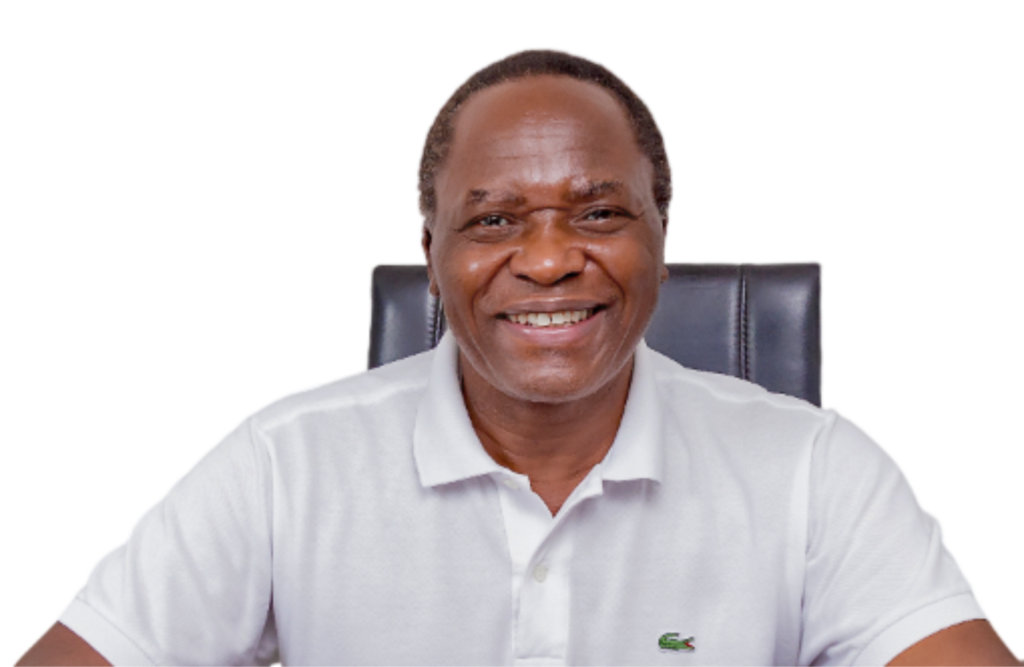
Dr. Edward G. Tamale Sali
Dr. Edward Tamale-Sali is the Founder, Director, and Resident Doctor of the Women’s Hospital International and Fertility Centre, an institution that stands today as a testament to decades of professional excellence, personal sacrifice, and unwavering commitment to women’s health and reproductive medicine.
His medical journey began at Makerere University in Kampala, Uganda, one of Africa’s most prestigious medical training institutions, where he graduated with a Bachelor of Medicine and Bachelor of Surgery (MB ChB) in 1974. This foundational training not only equipped him with strong clinical skills but also instilled in him a deep sense of service to humanity, a value that would later define the course of his career.
Following his graduation, Dr. Tamale-Sali pursued advanced postgraduate training in the United Kingdom, where he steadily built a formidable professional profile in obstetrics and gynaecology. In 1977, he attained the MRCS and LRCP through the English Conjoint examinations of the Royal Colleges, marking a significant milestone in his international medical qualifications. His commitment to excellence in women’s reproductive health saw him earn the Diploma of the Royal College of Obstetricians and Gynaecologists (DRCOG) in 1979, alongside certification from the Family Planning Association in the same year. These qualifications reflected his growing specialization in maternal health, fertility, and family planning, areas that would become central to his life’s work. His academic and professional advancement continued with the attainment of Membership of the Royal College of Obstetricians and Gynaecologists (MRCOG) in 1982, followed by Fellowship of the Royal Society of Edinburgh (FRSEd) in the same year. In recognition of his extensive experience, contribution to the field, and professional standing, he was later awarded the Fellowship of the Royal College of Obstetricians and Gynaecologists (FRCOG) in 1995, one of the highest honors in the specialty.
Dr. Tamale-Sali’s career as a consultant obstetrician and gynaecologist spans several decades and continents, during which he gained wide-ranging clinical exposure and invaluable experience in diverse healthcare systems. In the United Kingdom, he worked in a number of reputable hospitals, including the Women’s Hospital Nottingham between 1977 and 1979, where he honed his skills in obstetric care and complex gynaecological cases. He later served at Torbay General Hospital from 1981 to 1982, Hereford County Royal Hospital from 1982 to 1983, and the Royal Hospital in Derbyshire from 1983 to 1985. These appointments exposed him to a broad spectrum of clinical challenges and cutting-edge medical practices, enabling him to develop a high level of competence in both routine and highly specialized procedures. His international experience was further enriched during his long tenure at the Kuwait Oil Company Hospital, where he worked from 1986 to 2004. In Kuwait, he served a multicultural population and dealt with complex obstetric and fertility cases, further refining his expertise and reinforcing his reputation as a skilled and compassionate consultant.
In 2004, after nearly three decades of practice abroad, Dr. Tamale-Sali and his wife made the deliberate and courageous decision to return to Uganda with the vision of giving back to their homeland. Their return was marked not by abundance but by determination, humility, and faith in their calling. Armed with a wealth of experience, a few pieces of second-hand medical equipment, and their limited personal resources, they converted what was initially intended to be their accommodation into a functional clinic and surgical space. This modest beginning laid the foundation for what would become the Women’s Hospital International and Fertility Centre in Kampala, Uganda. The establishment of the hospital was driven by Dr. Tamale-Sali’s desire to make high-quality obstetric, gynaecological, and fertility services accessible to women who previously had limited options for specialized care. From these humble origins, the Women’s Hospital International and Fertility Centre grew into a respected medical institution, serving not only the Ugandan population but also patients from across Africa and beyond. He has since opened other women’s hospitals in Uganda, Tanzania and Zambia.